
The choice of acoustic material directly determines the final sound absorption effect, project budget and long-term user experience. The four mainstream interior acoustic solutions on the market — polyester fiber panels, mineral wool panels, wooden acoustic panels and fabric wrapped panels — each have distinct strengths and fit very different use cases.
Core Overview of Four Materials
1.Polyester fiber acoustic panels: Made of 100% PET fiber via hot pressing, with rich color options and flexible installation, combining sound absorption and decorative function.
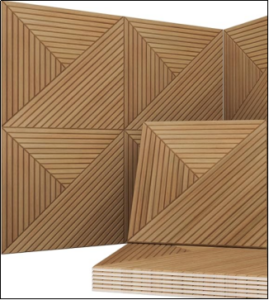
2.Mineral wool acoustic panels: Made from slag wool with binders, low-cost and high fire rating, only suitable for ceiling applications.
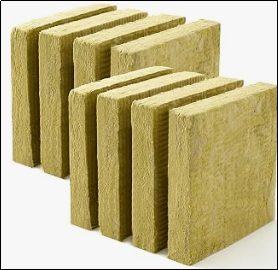
3.Wooden acoustic panels: MDF or solid wood substrate with slotted/perforated surface, absorbs sound via resonance, with premium wood grain aesthetics.
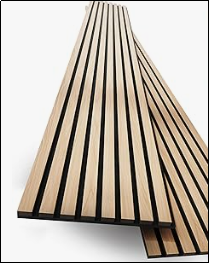
4.Fabric wrapped acoustic panels: Glass wool or PET fiber core wrapped with fire-retardant fabric, excellent full-frequency absorption, designed for professional acoustic spaces.
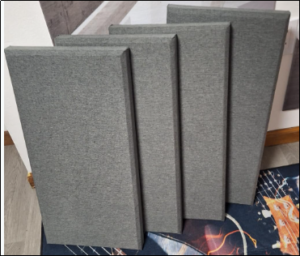
Key Pros & Cons
Polyester fiber acoustic panels: The all-around option. No obvious weaknesses in sound absorption, eco-safety, fire resistance or durability; works for both walls and ceilings with fast, dust-free installation. Limitations: cannot meet Class A non-combustible requirements, and less effective for extreme low-frequency scenarios.
Mineral wool acoustic panels: Budget ceiling solution. Meets basic fire codes at very low cost, but very limited application scenarios, high wear rate and potential respiratory health risks. Only suitable for low-budget basic public projects.
Wooden acoustic panels: Aesthetic-focused premium option. Superior wood grain finish, but high price, formaldehyde risk and poor moisture resistance; actual acoustic performance fluctuates greatly with installation craftsmanship.
Fabric wrapped acoustic panels: Professional acoustic solution. Industry-leading full-frequency and low-frequency absorption, but difficult to clean, complex to install, high cost and high maintenance difficulty.
Application-Based Selection Guide
Open offices / schools / kindergartens: Polyester fiber panels are the first choice — eco-friendly, impact-resistant, highly versatile and most cost-effective.
Standard office ceilings / low-budget public buildings: Mineral wool panels are acceptable for basic noise reduction and fire compliance.
High-end hotels / auditoriums: Recommended combination of wooden panels + polyester fiber panels, balancing visual quality and budget control.
Professional recording studios / home theaters: Recommended combination of fabric wrapped panels + polyester fiber panels, balancing acoustic performance and long-term maintainability.
Cross-border e-commerce / overseas retail: Polyester fiber panels are the top pick — lightweight for shipping, DIY-friendly, and available with full compliance certifications.
Our Product Advantages
As a professional manufacturer of sound-absorbing materials, our polyester fiber acoustic panels are suitable for a wide range of applications:
Performance Verified by Authorities: The 12mm-thick panels achieve a Noise Reduction Coefficient (NRC) of 0.78; products have passed GB 8410 Class A-0 fire safety tests, temperature resistance tests, and phthalate (plasticizer) compliance testing.
Comprehensive Export Certifications: Holds EU CE CPR certification and RoHS 2.0 compliance, meeting market entry requirements for Europe and the United States.
Strong Customization Capabilities: Offers a selection of over 50 standard colors and supports custom dimensions and unique panel shapes to suit diverse design schemes.
Flexible Service System: Provides one-stop solutions, including mixed-color trial orders, free samples, OEM production, and overseas warehouse drop-shipping services.
Reliable Quality Control: The factory is certified under ISO 9001, ISO 14001, and ISO 45001 management systems, ensuring stable production capacity and reliable delivery schedules.
Closing
There is no universally “best” acoustic material — only the most suitable solution for a given scenario. For most commercial, educational and office spaces, polyester fiber acoustic panels have become the mainstream alternative to traditional materials, thanks to their balanced performance and cost efficiency.